Paving is one of the most consequential decisions in any outdoor renovation. Get it right and the result is a seamless, durable surface that adds genuine value to a property. Get it wrong and homeowners find themselves dealing with cracking, discolouration, heat retention, and costly repairs within just a few seasons.
For Perth homeowners, the stakes are higher than most. The city’s extreme UV exposure, long dry summers, reactive clay soils, and wide daily temperature swings create conditions that expose every weakness in a poorly chosen paver. This guide cuts through the noise to explain what actually works — and why — for the most common outdoor spaces in Perth.
Why Perth’s Climate Changes Everything
Most paving guides are written for temperate climates. Perth is not a temperate climate. Summers regularly exceed 40°C, UV radiation is among the highest in the world, and the shift between wet winters and bone-dry summers puts significant stress on ground-level materials.
Read More : Joe Cianciotto Discusses What Makes Co-Living Appealing to Today’s Young People
Dark-coloured pavers absorb and retain heat at a level that can make outdoor spaces genuinely uncomfortable during summer afternoons. Cheaper concrete pavers expand and contract dramatically with temperature fluctuations, accelerating joint failure. And Perth’s reactive soils — which swell when wet and shrink when dry — mean that sub-base preparation and paver thickness matter enormously.
Understanding these conditions is the starting point for choosing pavers that will still look good in fifteen years.
Driveway Pavers: Prioritise Durability and Load Tolerance
Driveways are the hardest-working surface on a property. They need to handle vehicle loads, resist oil staining, and maintain their appearance despite constant exposure to the elements. The most durable options for Perth driveways are exposed aggregate concrete and quality limestone pavers.
Exposed aggregate offers excellent grip, good thermal performance, and high resistance to heavy loads. Limestone pavers in a honed or smooth finish provide a cleaner aesthetic while still delivering the structural integrity required for regular vehicle traffic. Both options outperform standard pressed concrete when it comes to long-term surface quality in Perth conditions.
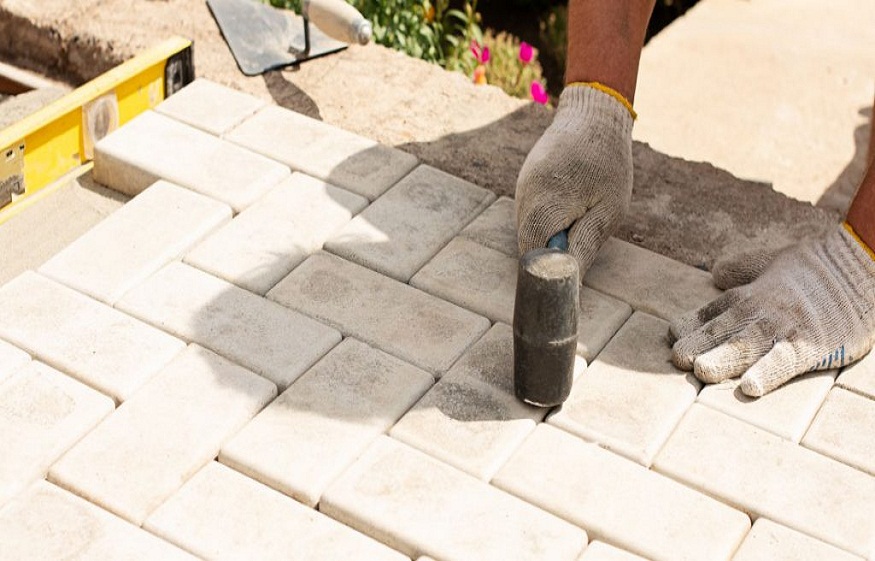
A common mistake on Perth driveways is underestimating the thickness requirement. For vehicle traffic, pavers should generally be 60–80mm thick with a properly compacted base. Skimping on either invites failure, particularly on reactive soils.
Pool Surrounds: Safety, Heat, and Chemical Resistance
Pool paving has three non-negotiable requirements: it must be slip-resistant when wet, it must not become dangerously hot underfoot in summer sun, and it must resist the chemical exposure from pool water and cleaning products.
Travertine consistently performs well on all three counts. Its natural light tones reflect heat rather than absorbing it, its surface texture provides grip without being abrasive underfoot, and it handles chemical exposure well when properly sealed. Limestone in lighter shades is another strong performer — cool underfoot, durable, and available in a range of finishes suited to pool environments.
Dark pavers around a Perth pool are a heat trap. On a 38°C summer day, dark stone can exceed 60°C surface temperature — genuinely hazardous for children and uncomfortable for anyone barefoot. This is one of the most common and most preventable mistakes in Perth pool landscaping.
Patios and Alfresco Areas: Where Aesthetics and Performance Meet
The alfresco and patio area is where Perth homeowners spend the most time outdoors — and where paver choice has the most visible impact on the feel of a home. The right material here is one that complements the architecture, connects visually with the interior, and creates a surface that’s comfortable to use year-round.
Cobblestone pavers work beautifully in character homes and heritage-style properties, bringing texture and warmth that manufactured materials struggle to replicate. For contemporary homes, larger-format limestone or honed aggregate pavers in neutral tones create a clean, expansive feel that extends the indoor living area outward.
For alfresco areas, consider the direction the space faces. A north or west-facing patio receives the full brunt of afternoon sun — lighter pavers will make that space significantly more pleasant to use. An east-facing alfresco has more latitude with colour choices.
Pavers vs Concrete: The Cost and Value Question
The most frequently asked question in Perth paving projects is whether concrete is cheaper than pavers. The short answer is yes — upfront. A plain concrete slab will generally cost less to install than a quality paved surface.
But the long-term picture is more nuanced. Concrete slabs crack over time, particularly on Perth’s reactive soils, and repairing or replacing a concrete slab is a significant, disruptive job. Individual pavers, by contrast, can be lifted and relaid if the ground shifts. They’re also easier to access for plumbing or irrigation repairs without destroying the entire surface.
From a property value perspective, quality pavers consistently outperform concrete. Buyers notice the difference, and a well-laid paved outdoor area is a genuine selling point in the Perth market.
Common Mistakes to Avoid When Laying Pavers in Perth
Most paving failures in Perth come down to a handful of recurring errors rather than material defects. Being aware of them saves considerable expense down the track.
Skipping these steps to save money upfront almost always results in surface movement and joint failure within a few years.
Choosing pavers for looks in a showroom without testing them in situ is another common error. Colours appear dramatically different under Perth’s bright natural light compared to indoor showroom conditions. Always view samples outdoors, in the actual position they’ll be installed, before committing.
Finally, inadequate sealing on porous materials like limestone and travertine leaves surfaces vulnerable to staining from organic matter, oil, and pool chemicals. Sealing should be done at installation and repeated on a schedule appropriate to the material and exposure.
Choosing the Right Paving Supplier in Perth
Not all paving suppliers are equal, and the difference between a quality product and a budget one often isn’t visible until two or three years after installation. When evaluating suppliers, look for those who manufacture locally or have direct quality control over their product, can supply technical specifications including compressive strength and slip resistance ratings, and have a track record of both residential and commercial projects in the Perth region.
Local manufacturing matters particularly in Perth, where lead times from interstate or overseas suppliers can extend project timelines significantly and make it harder to address any quality issues after delivery.
For homeowners beginning their research, a good starting point is to browse the full range of options from a dedicated pavers Perth specialist who can advise on material suitability for specific conditions, offer samples for in-situ testing, and provide guidance on base preparation requirements for your specific soil type.
The Bottom Line
The best pavers for a Perth home are the ones chosen with an honest understanding of local conditions — not just what looks good in a catalogue. Heat performance, soil movement, slip resistance, and long-term durability all matter more in Perth’s climate than in more forgiving environments.
Read More : Is Metal Roofing Worth It for Residential Homes?
Spending time at the selection stage — comparing materials, testing samples outdoors, and understanding the sub-base requirements for the specific location — is the single highest-leverage investment a homeowner can make in a paving project. The surface they choose will be underfoot every day for the next decade or more. It deserves careful thought.